Put Coding Agents on the Same Delivery Path as Engineers
October 13, 2026 · 7 min read
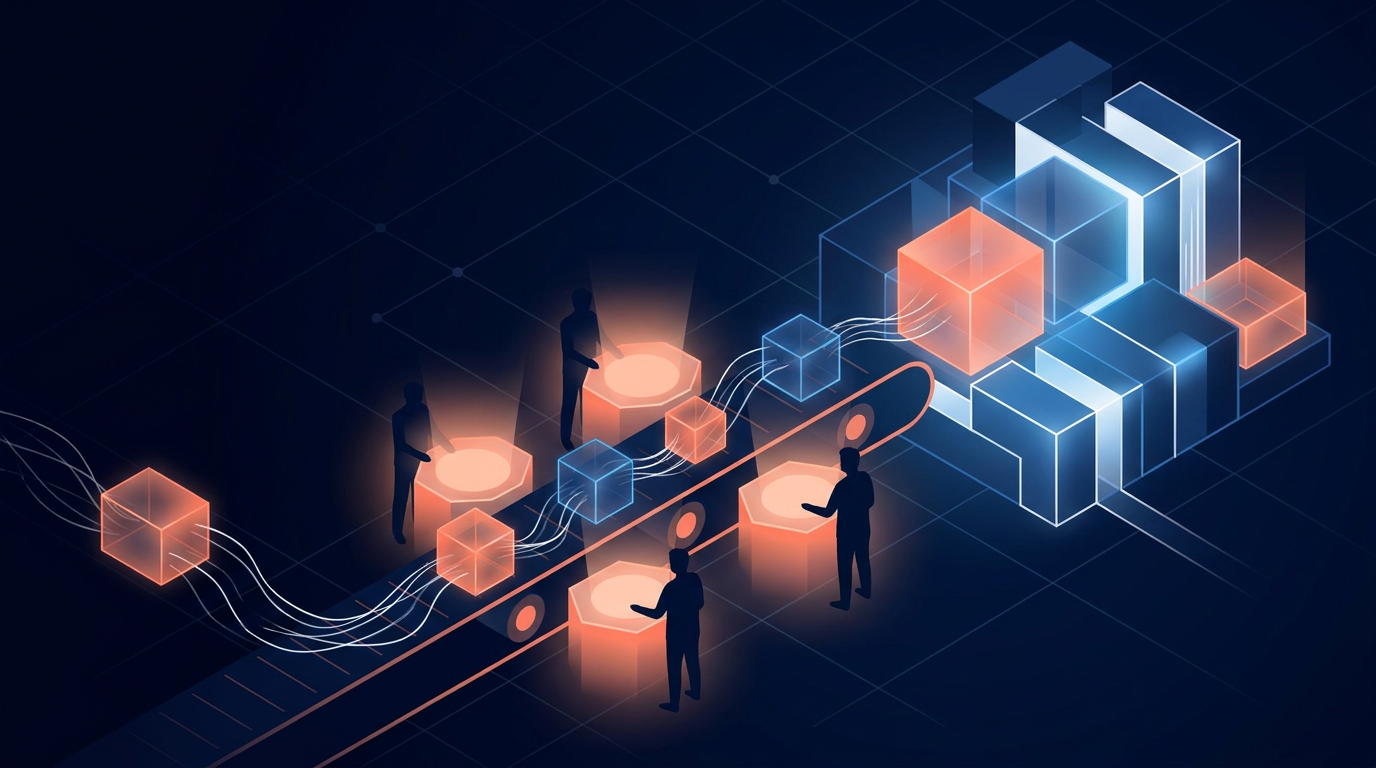
Agentic coding tools are moving from autocomplete into repository-level work: tracing defects, changing several files, running tests, and opening pull requests. That makes them useful to production engineering teams, but it does not make them autonomous engineers.
The practical operating model is simpler: treat an agent as an untrusted contributor with unusual speed, broad repository access, and weak situational judgment. Let it produce changes through the existing delivery system. Do not create a privileged shortcut around that system.
This framing avoids two common failures. The first is limiting agents to demos because nobody trusts their output. The second is granting broad access because the demo looked convincing. Production adoption sits between those extremes: bounded assignments, isolated execution, explicit evidence, and accountable human ownership.
Start with work that has a verifiable finish line
Agents perform best when success can be checked mechanically. “Improve the billing service” is not an assignment. “Replace this deprecated client, preserve these public interfaces, and pass these contract tests” is.
Good initial tasks include dependency upgrades, repetitive API migrations, test generation around established behavior, static-analysis remediation, small bug fixes with reproductions, and documentation updates tied to code changes. These tasks may span many files, but their boundaries are visible.
A production-ready task should specify:
- The repository, service, and directories in scope
- The behavior that must change and behavior that must not
- Relevant tests, commands, logs, or issue references
- Files or interfaces that require explicit approval
- A maximum change size or time budget
- The expected artifact, usually a branch and pull request
Avoid starting with ambiguous architecture work, incident command, security-sensitive authorization changes, or modifications requiring undocumented business context. Those tasks expose the agent’s biggest weakness: it can create locally plausible code while misunderstanding why the system exists.
Task selection is therefore an engineering management responsibility, not merely a prompting technique.
Give each run a disposable workspace
An agent that can inspect a repository, execute commands, install packages, and call external services is running code on your behalf. Its workspace should be treated like an ephemeral CI runner, not a developer laptop.
Create a fresh branch and isolated environment for every run. Mount only the credentials required for the assignment, preferably as short-lived tokens. Restrict network destinations. Cap CPU time, wall-clock time, API spend, and subprocess depth. Destroy the environment when the run finishes.
Do not expose a developer’s SSH keys, browser session, home directory, cloud profile, or production kubeconfig. A mistaken command is enough to make shared workstations unsafe, even when the agent itself is not under attack.
Isolation also improves reproducibility. When an agent succeeds only because a laptop contains an untracked package or cached credential, the resulting pull request carries hidden dependencies. Starting clean forces setup assumptions into scripts and repository documentation, where the rest of the team can inspect them.
Make the pull request the unit of work
Chat transcripts are poor engineering artifacts. They are long, hard to compare, and disconnected from the code that ships. The durable output of an agent run should be a conventional pull request.
Require the agent to include:
- A concise explanation of the defect or requested change
- The approach taken and significant alternatives rejected
- Tests executed, including exact commands and results
- Known gaps, assumptions, and unverified behavior
- Links to the originating ticket and execution logs
The pull request should identify that it was agent-produced, but it should not enter a separate review universe. Existing CODEOWNERS rules, branch protection, security scanning, test suites, and deployment checks should still apply.
A human engineer must sponsor the change. Sponsorship means understanding the diff well enough to own its consequences, not merely clicking approve after CI turns green. If no engineer is willing to own the change, it is not ready to merge.
Keep commits small enough to inspect. Agents often produce opportunistic cleanup, formatting churn, or speculative abstractions while solving a narrow issue. Instruct them to minimize unrelated edits, then enforce that expectation during review. A 2,000-line diff is not efficient simply because it took the agent five minutes to generate.
Review the evidence, not the confidence
Agents explain incorrect changes fluently. Production teams should discount narrative confidence and review observable evidence.
For a bug fix, ask whether the reproduction fails before the change and passes afterward. For a migration, verify that forbidden APIs no longer appear and compatibility tests still pass. For generated tests, inspect whether assertions capture behavior rather than implementation trivia. For performance work, demand comparable measurements.
Reviewers should pay particular attention to places where agents routinely take shortcuts:
- Error handling that swallows failures or changes retry behavior
- Tests weakened to accommodate the implementation
- Authentication and authorization assumptions
- New dependencies introduced for trivial functionality
- Configuration defaults that differ across environments
- Concurrency, transaction boundaries, and idempotency
- Public interfaces changed without updating consumers
Require the agent to stop and ask for clarification when evidence is unavailable. Guessing should be an explicit failure mode, not a hidden default.
Separate generation throughput from delivery throughput
Coding agents can create more candidate changes than a team can responsibly review. That does not mean the team has become more productive. It may simply have moved the bottleneck downstream.
Track the full path from assignment to production. Useful operational measures include:
- Percentage of agent runs that produce a reviewable pull request
- Human review time per accepted change
- Rework requested before merge
- CI retries and flaky-test exposure
- Lead time from assignment to deployment
- Rollbacks, escaped defects, and post-merge fixes
- Compute and model cost per merged change
Compare these metrics by task class. An agent may be excellent at dependency updates and poor at domain-heavy bug fixes. A single organization-wide acceptance rate hides that distinction.
Also monitor queue pressure. If agents open 40 pull requests while maintainers can review ten, limit concurrency or tighten task eligibility. Unreviewed code is inventory, and rapidly generated inventory still has carrying costs: conflicts, stale assumptions, security alerts, and reviewer fatigue.
The target is not maximum agent activity. It is lower cost or lead time for safely delivered changes.
Establish an on-call and failure model
Once agents run on schedules or respond to issue queues, they become part of the engineering system. Someone must own failures in that system.
Define which team maintains execution images, repository instructions, integrations, and usage budgets. Route infrastructure failures separately from bad code proposals. Set alerts for unusual token consumption, repeated command loops, credential errors, and sudden drops in successful runs.
Use a kill switch that disables new runs without blocking normal human development. During incidents, agents should default to observation or stop entirely unless responders explicitly delegate a bounded task. An automated contributor generating branches during an outage can add noise when the team needs a stable operating picture.
Retain enough run data to diagnose failures: model and tool versions, repository commit, commands, outputs, costs, and final artifacts. Apply normal retention and access rules because these logs can contain source code, test data, and operational details.
Roll out by task class, not by department
A sensible adoption sequence is narrow and empirical. Choose one repository with reliable tests, identify two or three repeatable task classes, and appoint maintainers who will review every result. Run enough work to see recurring failure patterns, then improve repository instructions, fixtures, scripts, and task templates.
Expand only when accepted changes reduce end-to-end effort. Do not scale because the agent completed a compelling one-off assignment.
This approach also reveals where the codebase itself needs work. If neither engineers nor agents can run tests locally, identify service ownership, or understand deployment commands, the problem is not agent capability. The repository lacks operational clarity. Improving that clarity benefits every contributor.
Takeaway
Production coding agents should travel the same path as engineers: bounded ticket, isolated branch, observable tests, reviewed pull request, and accountable owner. Measure merged outcomes rather than generated code. When the delivery path is disciplined, agents can accelerate routine engineering work without becoming a parallel, ungoverned development process.