Run Nearshore AI Pods With a Two-Speed Delivery Model
September 1, 2026 · 7 min read
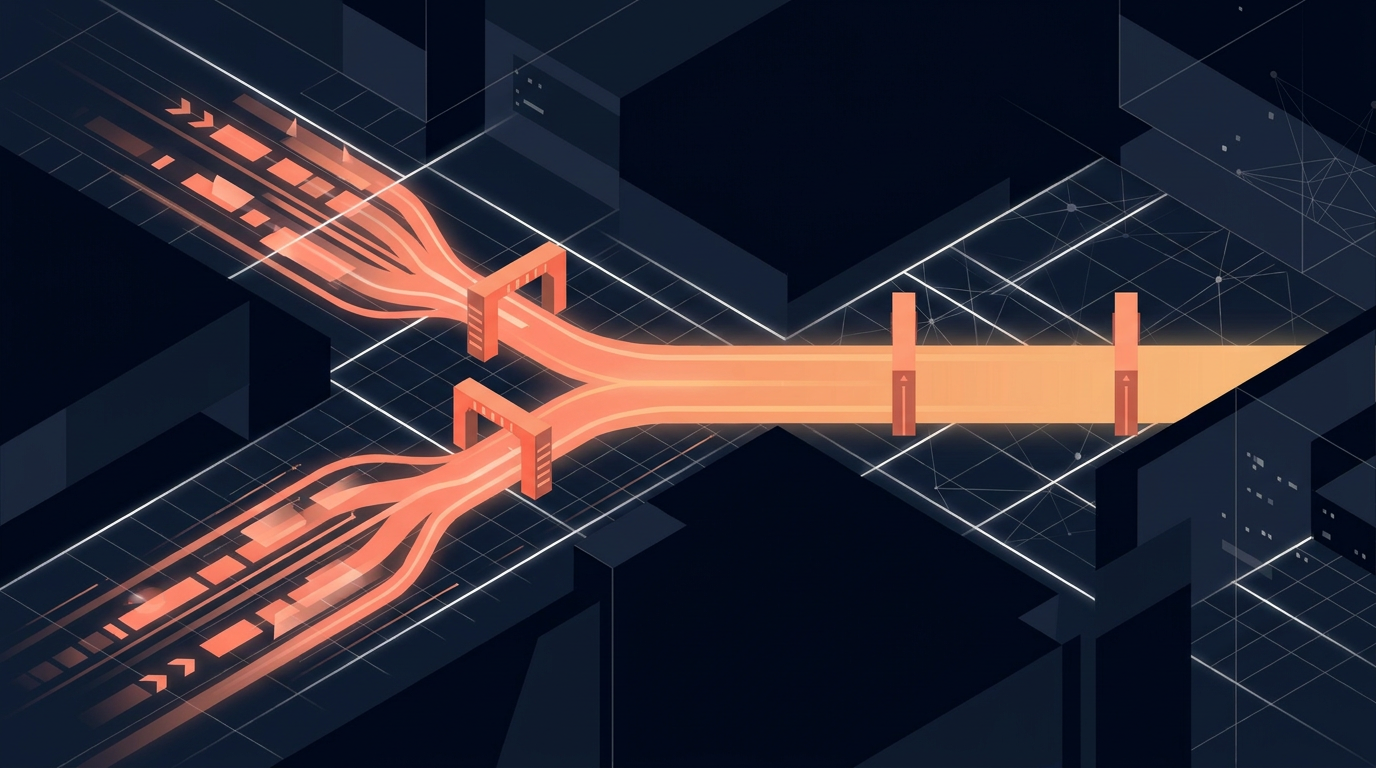
AI agents change the economics of distributed engineering, but not in the way many staffing plans assume. They do not simply make every engineer twice as productive. They make some work dramatically faster while leaving judgment, integration, and accountability stubbornly human.
That distinction matters for nearshore teams. Time-zone overlap gives them an advantage over asynchronous offshore models: agents can execute in the background, while people use shared working hours to resolve ambiguity, review risky changes, and coordinate across systems.
The operating model should reflect those two speeds. Agents produce options quickly. Humans accept change deliberately.
Stop Treating the Agent as Another Developer
A common planning mistake is to add agents to the team mentally as if they were junior engineers. That leads to agent-assigned tickets, inflated capacity estimates, and disappointment when generated work creates more review than it removes.
An agent is closer to an execution layer. It can search a repository, trace references, draft migrations, update repetitive code, generate test cases, and summarize failures. It does not own the business outcome or understand which local conventions are accidental versus essential.
Nearshore pods should therefore be staffed around responsibility, not output volume. A practical pod still needs engineers who can:
- Clarify requirements with product and platform owners
- Decompose changes into safe execution units
- Recognize cross-service and operational consequences
- Review generated artifacts efficiently
- Validate behavior in realistic environments
- Escalate ambiguity before code compounds it
The agent increases the surface area each engineer can cover. It does not eliminate the need for engineers who understand the system.
Use Two Queues Instead of One Backlog
A conventional sprint backlog mixes discovery, coding, review, testing, and release work. Agent-enabled delivery works better when the pod distinguishes between an execution queue and an acceptance queue.
The execution queue contains well-specified tasks an agent can attempt: generating adapters from an existing pattern, applying mechanical API changes, drafting fixtures, documenting modules, or investigating a bounded failure.
The acceptance queue contains artifacts awaiting human judgment. That includes generated pull requests, investigation reports, proposed test cases, migration plans, and detected inconsistencies.
This separation exposes the real constraint. If the acceptance queue grows continuously, the team does not need more agent runs. It needs smaller batches, better task specifications, stronger automated checks, or more review capacity.
Track both queues explicitly. Useful measures include median time to first usable artifact, acceptance wait time, rejection rate, and rework caused by incorrect assumptions. Do not celebrate generated pull requests while reviewers are drowning.
Divide Work by Reversibility and Context
The best delegation rule is not simply “low risk goes to AI.” Risk is too vague. Evaluate work along two dimensions: how easily it can be reversed and how much undocumented context it requires.
Highly reversible, low-context changes are strong agent candidates. Examples include adding tests around established behavior, updating repetitive configuration, converting code to a documented internal pattern, or producing a first-pass dependency analysis.
Low-reversibility or high-context changes should remain human-led. Database migrations, authorization logic, shared contracts, incident fixes, and modifications to financial calculations deserve direct engineering ownership even when agents assist with research or drafting.
A useful four-part classification is:
- Delegate: Reversible work with clear patterns and deterministic validation
- Pair: Moderate-context work where an engineer guides the agent interactively
- Draft only: High-impact work where the agent proposes but cannot finalize
- Human only: Changes involving sensitive access, unclear intent, or difficult rollback
Apply this classification during refinement. Waiting until implementation encourages engineers to delegate based on convenience rather than suitability.
Turn Time-Zone Overlap Into an Acceptance Window
Nearshore teams often sell overlap as easier meetings. That is useful, but undersells the operational advantage. Shared hours can become a predictable acceptance window for agent-produced work.
For example, engineers can prepare bounded tasks late in their day and allow approved automations to run against isolated branches. At the start of the next shared window, the pod triages outputs together: accept straightforward artifacts, return weak attempts with better constraints, and escalate discoveries requiring product or architecture input.
During overlap, use short working sessions for decisions that would otherwise cause repeated agent attempts. A 15-minute conversation about an undocumented contract can prevent hours of plausible but irrelevant generation.
Avoid continuous prompting throughout the day. That fragments engineering attention. Batch preparation, execution, and acceptance where possible. The goal is not to keep agents busy. It is to keep the delivery system flowing.
Design Tasks as Executable Briefs
Agents perform poorly when handed tickets written mainly for humans. “Improve error handling” or “refactor the billing client” leaves too much room for invention.
An executable brief should state the target, boundaries, evidence, validation, and stopping conditions. It might specify the files in scope, the existing implementation to imitate, commands that must pass, interfaces that cannot change, and situations that require escalation.
A strong brief answers five questions:
- What observable result is required?
- Which code and systems may be changed?
- Which references represent the approved pattern?
- How will correctness be checked?
- When should the agent stop and ask for help?
Creating these briefs is real engineering work. Nearshore leads should review them as carefully as implementation plans. Poor inputs do not become cheap merely because generation is fast.
Make Review Cheaper Than Regeneration
Agent output can shift costs from coding to review. Long generated diffs, speculative abstractions, and unnecessary formatting changes make verification expensive even when the result is technically correct.
Set constraints that optimize for reviewability. Require small diffs, prohibit unrelated cleanup, preserve public interfaces by default, and ask for a concise change rationale. Generated code should cite the repository pattern it follows when one exists.
Automated checks should reject obvious failures before a human sees them. Formatting, compilation, static analysis, focused tests, dependency policies, and secret scanning belong ahead of the acceptance queue.
Reviewers should not repair weak agent work line by line. If the premise is wrong or the diff is unnecessarily broad, reject it and improve the brief. Otherwise the team quietly converts senior engineers into editors for machine-generated code.
Keep Accountability Inside the Pod
Shared ownership becomes dangerous when failures can be attributed vaguely to “the AI.” Every accepted change needs a named human owner who understands its intent and can support it after release.
That owner does not need to type every line. They do need to verify the assumptions, review evidence, understand rollback, and communicate downstream effects. For cross-service changes, assign one integration owner rather than relying on several partial approvals.
Nearshore partners should also be included in architecture context, incident reviews, and product discussions. Restricting them to agent supervision creates a shallow delivery function. The strongest model gives the pod enough domain access to challenge both the request and the generated solution.
Plan Capacity Around Constraints
Do not lower headcount estimates by applying a universal AI productivity multiplier. Model the workflow instead.
Estimate how much work is delegable, how much acceptance capacity exists, and which environments or approvals limit throughput. A pod maintaining mature services with strong tests may benefit substantially. A pod untangling undocumented legacy behavior will spend more time building context before agents become useful.
Start with one workflow for four to six weeks. Compare lead time, acceptance wait, escaped defects, and rework against a similar baseline. Then expand only where the acceptance system remains healthy.
Takeaway
Nearshore teams gain leverage from agents when they separate rapid execution from deliberate acceptance. Build two queues, classify work by reversibility and context, use overlap for decisions, and keep a human accountable for every accepted change. The winning model is not more generated code. It is faster delivery with review capacity, system knowledge, and operational responsibility intact.